
Grasscloth Wallpaper Installation in Plano, Frisco, McKinney and Across the DFW Metroplex
Trusted wallpaper installation experts serving DFW since 1985
- 40 years of professional experience
- Featured in D Magazine
What to Expect From Our Grasscloth Installation
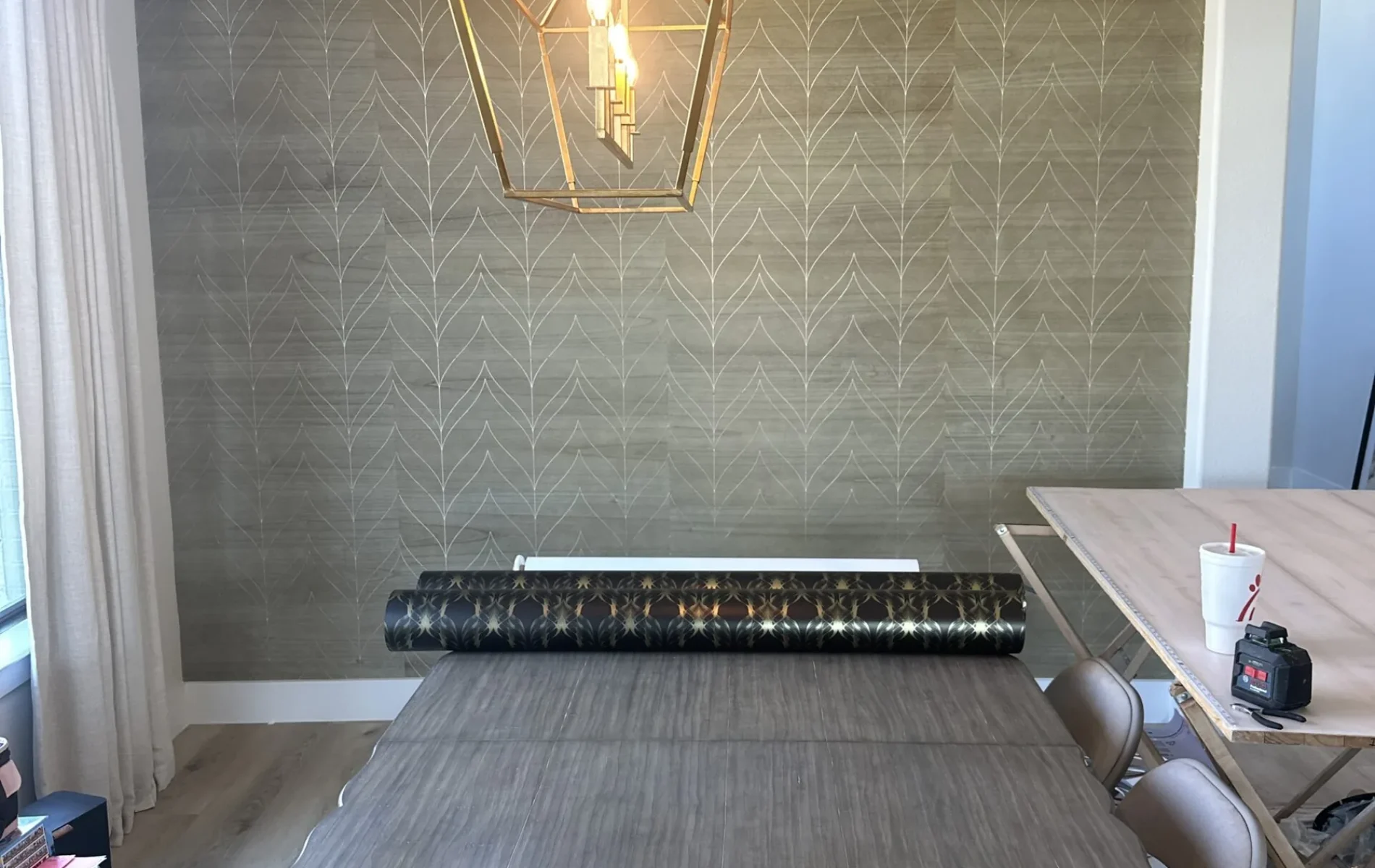
Grasscloth is one of the most common wallcoverings we install in DFW homes, and for good reason: woven natural fibers like sisal, jute and seagrass give a room a texture and warmth that printed paper can’t copy. It’s also one of the least forgiving materials to hang. Every roll is made from natural strands, so color shifts from panel to panel, seams stay visible, and the fibers stain if paste or water touches the face. Wolf-Gordon’s grasscloth installation guide warns that any paste or water on the face will stain or discolor the material.
With over 40 years installing wallcovering across the DFW area, we know where grasscloth shines, where it struggles, and how to prepare a wall so it looks right for years. We’ve installed it on walls, ceilings and in powder rooms. Most jobs get scheduled within a couple of weeks of your first call. Grasscloth is part of our residential wallpaper service.
Our Grasscloth Process, Start to Finish
From the first visit to the final walkthrough, here’s what to actually expect.
The Estimate Visit
We measure, assess the wall conditions, and look at the grasscloth you’ve chosen. Because a woven surface hides very little, we look closely for texture, cracks and old adhesive residue that would need to be addressed first, and point out anything valuable or fragile nearby so there are no surprises later.
Testing Any Existing Wallpaper
If there’s wallpaper already up, we’re upfront that we can’t always guarantee in advance whether it will strip off cleanly. If it’s adhered too tightly, forcing it off would damage the wall, so we test it on site before deciding which way to go.
Arrival and Setup
On installation day, we arrive at the scheduled time and cover the floors with protective underlayment first, then move furniture toward the middle of the room and protect everything else nearby before any prep work starts.
Dust-Free Sanding and the Right Primer
We sand and prep the walls with our Festool Planex dust-free system, then prime. Primer matters more with grasscloth than with most papers, because the seams show slightly by nature. When it helps, we tint the primer to the background color of the paper so the wall underneath doesn’t show through at the seams.
Installation and Walkthrough
We hang each grasscloth the way its manufacturer requires, including how the panels are oriented. Then we clean the work area, remove protective coverings and walk the room with you before we call the job finished.
Grasscloth Fibers and Where They Work
Grasscloth is a family of natural-fiber wallcoverings rather than one product. The fiber, the weave and the backing all change how it looks on the wall and where it belongs in your home.
Common Fibers
- Sisal
- Jute
- Seagrass
- Arrowroot
- Raffia
- Hemp
Where We've Installed It
- Dining and living rooms
- Home offices and libraries
- Bedrooms
- Accent and fireplace walls
- Ceilings
- Powder rooms without a shower or tub

Why Grasscloth Seams Show, and What Good Prep Changes
Grasscloth seams are never invisible. The strands are natural, so every panel has its own shading, and two panels side by side will never match perfectly. Calico’s jute wallpaper installation guide says the same: seams stay visible by design, and shade varies from panel to panel. Roman, whose wallcovering adhesives we use, notes that seam matching is nearly impossible with natural strands and recommends confirming that every roll comes from the same dye lot, since different production runs can shade differently.
What a good installation controls is everything around that natural variation: a smooth wall with no texture or residue showing through the weave, a primer that keeps the wall color from showing at the seams, a clear adhesive that won’t stain the fibers, and hanging each panel the way the manufacturer requires. We hang grasscloth with Roman PRO-880, a clear strippable adhesive made for nonwoven, vinyl and grasscloth wallcoverings.
Grasscloth is also porous. It absorbs moisture, so it isn’t a fit for full bathrooms or laundry rooms, though we have installed it in powder rooms without a shower or tub. Its fibers can also be scuffed or crushed in tight, high-traffic hallways.
Expert Tip
Caring for Grasscloth
Give the adhesive 24 to 48 hours to fully cure before touching the surface. After that, grasscloth should only be cleaned dry, with a soft brush or a dry cloth, because water and household cleaners can stain natural fibers. Keep furniture pulled slightly away from the wall, and try to keep the room’s temperature and humidity steady for the first week. Like most natural materials, grasscloth can fade over time in strong direct sun, so window treatments are worth considering in rooms with intense afternoon light.
Frequently Asked Questions
Common questions about grasscloth wallpaper in Plano and across DFW.
Why can I see the seams in grasscloth?
Seams in grasscloth always show to some degree, because natural strands vary in color and texture from panel to panel. That’s part of the material, not a sign of a bad installation. Careful prep keeps the seams tight and flat, and a primer tinted to the paper’s background keeps the wall color from showing through.
Why do my grasscloth panels look like different shades?
Natural fibers take dye differently, so shading varies between panels and between production runs. Manufacturers recommend confirming that all rolls share the same dye lot, and we hang each panel the way the manufacturer requires. Some variation is normal, and it’s a big part of grasscloth’s appeal.
Can grasscloth go in a bathroom?
Not in a full bathroom or laundry room, because grasscloth is porous and absorbs moisture. We have installed it in powder rooms without a shower or tub. Where there’s steam or splashing water, a solid vinyl wallcovering is the better choice.
Can you put grasscloth on a ceiling?
Yes. We’ve installed grasscloth on ceilings as well as walls. A ceiling needs the same careful prep, since texture and residue show through the weave just as they do on a wall.
Can grasscloth be removed later?
Yes, as long as the wall was primed properly before it went up. Grasscloth may need to be soaked off rather than peeled, but with the right primer underneath it should come away cleanly and leave the wall smooth.
Prefer to talk? (469) 585-8664